

Approach
Production safety and availability come first, always.
- Passive techniques first; active techniques only where agreed safe, while systems stay in production
- Minimal impact on operations and maintained availability
- Evaluates security against industry standards and frameworks: NIST CSF, IEC 62443, and NERC CIP
Scoping
Operational technology runs the physical world: the pumps, valves, turbines, and production lines that keep manufacturing, energy, and utilities moving. When those systems fail, the cost is downtime, damaged equipment, and risk to people. Our certified team assesses OT and industrial environments, so asset owners can find and fix weaknesses in their SCADA and ICS estates before an attacker or an accident does.
What we assess
OT systems such as Supervisory Control and Data Acquisition (SCADA) and Industrial Control Systems (ICS) are the backbone of manufacturing, energy, and utilities industries. These systems control and monitor physical processes, making them prime targets for cyberattacks that could disrupt operations, cause financial loss, and endanger public safety. Our team identifies and addresses vulnerabilities across your entire OT infrastructure, covering:
- Firewalls
- Demilitarized zones (DMZ)
- Sensors
- Instrumentation networks
- Control systems
How we work
Every OT engagement follows the same five-step process, built around the reality that these systems cannot simply be taken offline for a test.
Scoping
We map the environment with you: the Purdue levels in play, which zones and conduits are in scope, the specific PLCs, RTUs, HMIs, and historians involved, and where the IT/OT boundary sits.
The proposal states exactly what will be assessed and how deep, and rules out any open-ended activity near safety-critical systems.
Rules of engagement
Before any traffic touches the network, we agree on maintenance windows, off-limits assets, emergency contacts, and a clear escalation path. Anything that could affect a live process is scheduled with your operations and engineering teams first.
Nothing intrusive happens without their sign-off.
Execution (passive first)
We begin with passive techniques: network traffic capture, asset discovery, and configuration review, so we build an accurate picture without sending a single packet a controller did not expect. Active testing is introduced only where it is safe, and always during agreed windows with operations staff on hand.
Reporting
You receive a report written for two audiences at once: an executive summary that frames risk in terms of operational impact and safety, and technical findings that your control-system engineers and integrators can act on, each mapped to the relevant framework.
Retest & debrief
After your team and vendors remediate, we verify the fixes (passively where possible) and update each finding's status.
The engagement closes with a debrief that includes both your security and operations stakeholders.
What you get
Every assessment is documented for both the boardroom and the plant floor.
Executive summary
A risk picture framed in operational terms: what could disrupt production, damage equipment, or endanger safety, and how likely it is.
Findings with severity ratings
Each issue scored with CVSS and weighted by its real operational and safety impact, so remediation can be prioritised where it matters.
Reproduction & evidence
Clear documentation of each finding with supporting evidence, gathered in a way that respects the sensitivity of a live control environment.
Remediation guidance
Practical, OT-aware fixes that account for legacy equipment, vendor constraints, and the fact that patching is rarely as simple as it is in IT.
Retest verification
Findings are re-checked after remediation and the report is updated to reflect closed items.
Every engagement to date has produced validated findings.
Who runs it
Assessments are performed by our in-house team holding industry certifications including:
- OSCP
- OSCE
- CREST CRT
- CREST CPSA
- GIAC GREM
Each certification is earned through hands-on practical examination. Our team of highly qualified cybersecurity professionals has extensive experience in OT penetration testing. The same team presents its research at international venues and has served 180+ clients across finance, enterprise, and critical sectors. That practitioner background is what lets us work safely inside sensitive industrial environments. See the full list of certifications the team holds.
Our OT assessments evaluate your environment against the frameworks that matter for industrial and critical infrastructure.
- NIST CSF
- IEC 62443
- NERC CIP
Findings are mapped back to these standards so you can show auditors and regulators where you stand and demonstrate measurable progress between engagements. If your assessment needs to produce evidence in a specific format for an internal audit or a sector requirement, tell us during scoping.
Cover the IT side too
Penetration test
For IT-side systems, cloud environments, and applications that sit alongside your OT estate, pair this with a conventional penetration test so the whole attack surface (from the corporate network down to the plant floor) is covered.
Last reviewed: 12 Oct 2026
OT SECURITY
Before any traffic touches the network, we agree on maintenance windows, off-limits assets, emergency contacts, and a clear escalation path.
Frequently asked questions
Will testing disrupt our production or safety systems?
Production safety and availability come first, always. We engineer the engagement around it. We begin with passive techniques (traffic capture, asset discovery, configuration review) that send no packet a controller did not expect. Active testing is introduced only where it is safe, during agreed maintenance windows with your operations staff on hand. Production safety is never traded for coverage.
How does OT testing differ from a normal penetration test?
Assessing OT takes a different discipline: you cannot fuzz a PLC in production the way you would a login form. Our approach is built around the reality that these systems cannot simply be taken offline for a test, using passive-first techniques and OT-aware remediation that accounts for legacy equipment and vendor constraints.
How do you scope an OT engagement?
Scoping draws the safety envelope, not just the asset list. Once the Purdue levels, zones, and IT/OT boundary are agreed, we decide asset by asset what may be touched while it is running and what is only observed passively, which in practice is set by what can be taken out of service and by what the vendor's support terms allow. Writing that line into the proposal is what keeps it from becoming a tester's judgement call on the day.
From our OT team
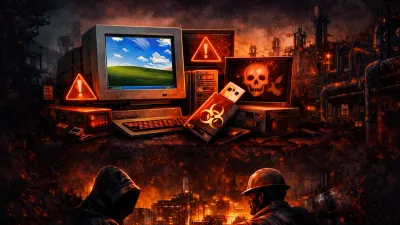
ARTICLES/19 Mar 2026
SCADA ยังรันได้อยู่ ทำไมต้องอัป OS
โรงงานจำนวนมากยังต้องใช้ Windows รุ่นเก่ากับ SCADA และ HMI เพราะซอฟต์แวร์ไม่รองรับ OS ใหม่ บทความอธิบายว่าทำไมเลิกใช้ไม่ได้ และลดความเสี่ยงด้วย compensating controls อย่างไร
ARTICLES/15 Jun 2024
Regulation, Standard, และ Guideline ที่ควรรู้ของ OT Security
OT Security ครอบคลุม ICS/SCADA ของโรงไฟฟ้า โรงงาน และระบบสาธารณูปโภค รวม regulation มาตรฐาน และ guideline ที่คนทำงานสายนี้ควรรู้
ARTICLES/19 Jan 2016
ICS คืออะไร ระบบควบคุมอุตสาหกรรมที่ต้องรู้จัก
ICS คือระบบ IT ที่ควบคุมเครื่องจักรตั้งแต่ระบบไฟฟ้า ประปา ไปจนถึงขนส่ง บทความพาดูองค์ประกอบหลักและเหตุผลที่ความปลอดภัยของมันต่างจากระบบ IT ทั่วไป
Tell us which systems must stay in production
The proposal states exactly what will be assessed and how deep.